On 29 September Donald Trump decided that artificial intelligence isn't called that anymore: from now on, at least for the US government, it's "super intelligence". When I read it I couldn't help laughing. Then I thought about it for a moment and realised the name is the least of our problems, because whatever you call it, AI has already walked into our offices, and the question I hear most often, at university and among colleagues, is always the same: will it give us a hand or steal our jobs?
Before trying to answer, though, there's some news I've been waiting a while to share.
IA per il progetto 2, the sixth volume of the Progetto e Calcolo series, is coming out soon. And with it starts a proper series, here on the blog and in the books, that will try to look at everything AI as a tool can do for people who design. The idea is to dig into every possibility while staying as general as possible, so without tying ourselves to one program or one company, because the names change every six months and the way we work a lot less. Anyone who buys the book will also be able to use some online tools built for it, and every prompt used is available on the dedicated page, just like for the first volume.
This article is the opener, and it starts from exactly that question: is AI an opportunity or a threat? First let's line up the data, then I'll tell you how I see it.
The numbers first#
Let's start with the scary ones, since they're the ones that get shared the most.
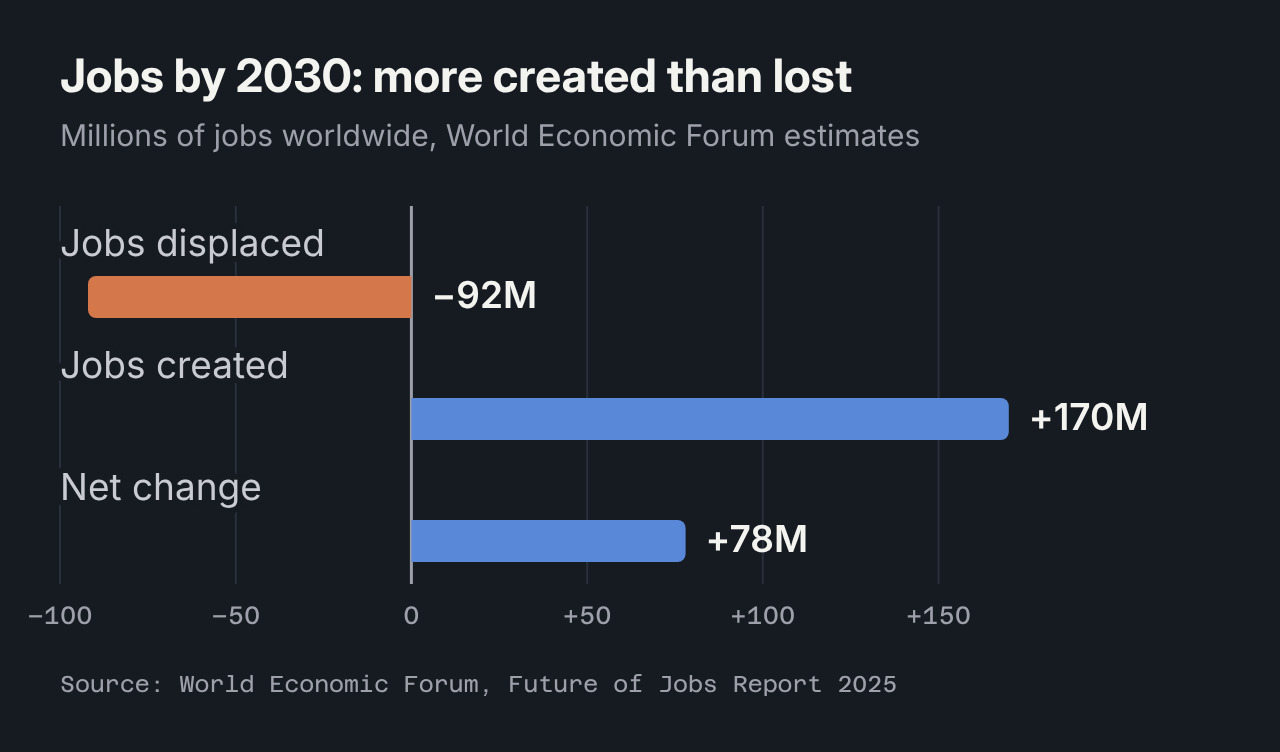
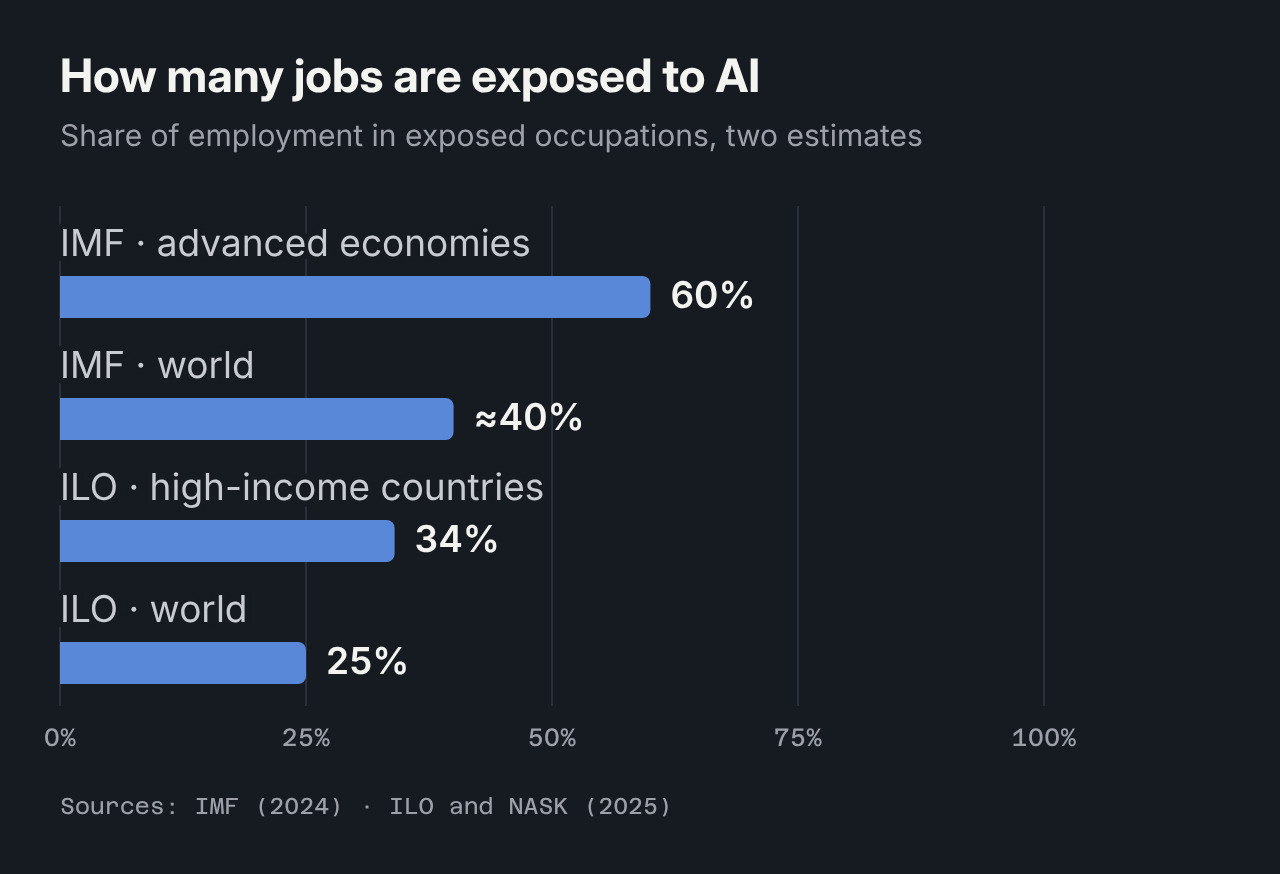
In 2024 the International Monetary Fund estimated that almost 40% of jobs worldwide are exposed to artificial intelligence, and that in advanced economies like ours the figure rises to about 60%. The World Economic Forum's Future of Jobs Report 2025 expects 92 million jobs to disappear by 2030, and 41% of the companies surveyed say they plan to cut staff where AI automates the work.
Put like that, you'd want to close the laptop and sign up for a plumbing course (which, by the way, wouldn't be a bad idea at all).
The same report, though, also says something else that makes the headlines far less often: over the same period 170 million new jobs will be created, a net gain of 78 million.
In 2025 the International Labour Organization calculated that one job in four is exposed to generative AI, and concluded that the most likely outcome is transformation, not replacement. Exposed, in other words, doesn't mean fired. It means part of what you do you'll do differently.
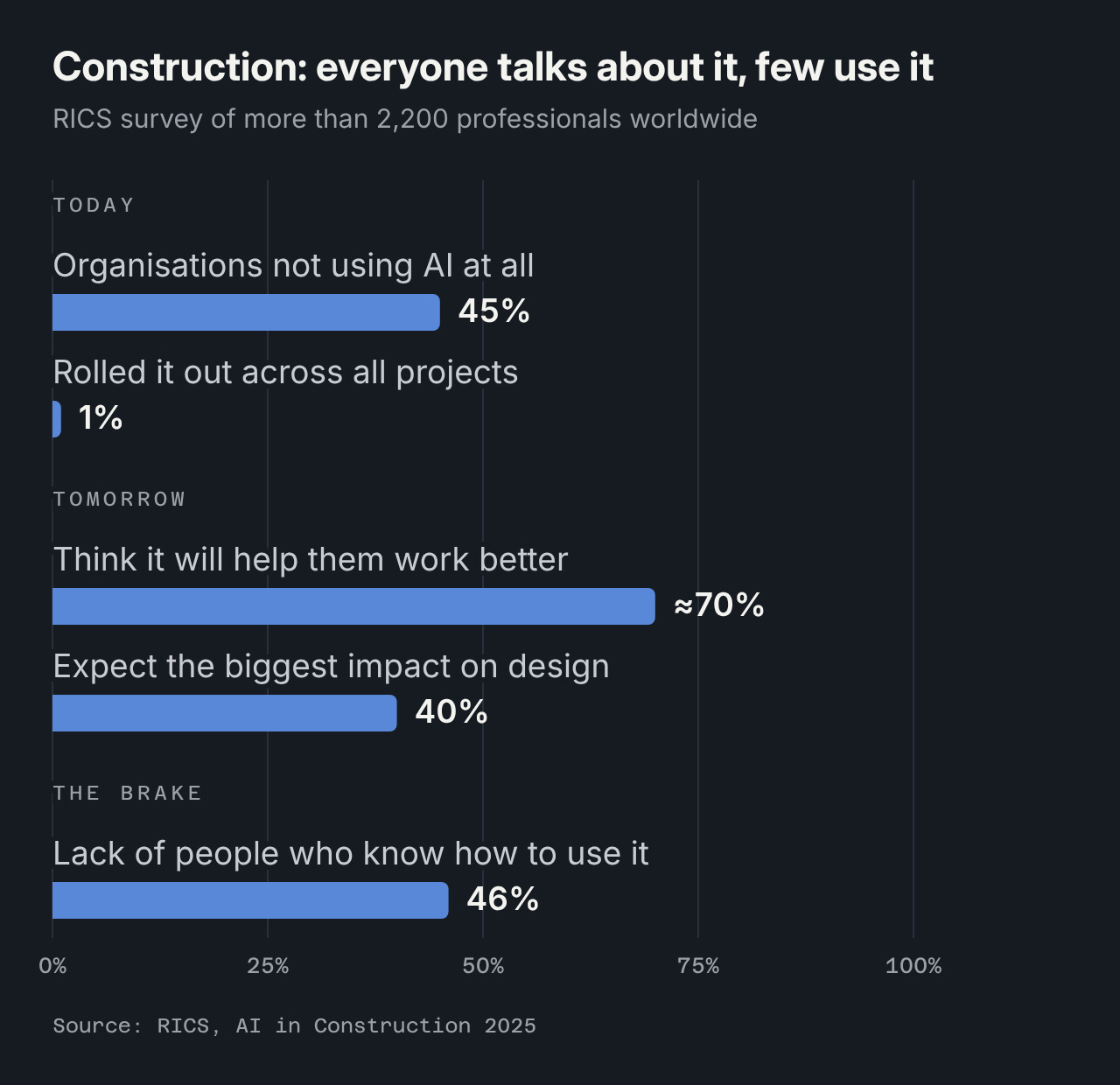
And our sector? Here things are almost comical. The RICS AI in Construction 2025 report, based on more than 2,200 professionals worldwide, says that 45% of organisations don't use AI at all and only 1% have really rolled it out across their projects. At the same time almost 70% think it will help them work better, 40% expect the biggest impact to land on design, and 46% say the main obstacle is a lack of people who know how to use it. In short: everyone talks about it, few use it, and the people who can use it are scarce. For anyone studying right now, that looks less like a threat and more like an empty seat.
The other side of the coin#
Then there's the problem anyone who has used a chatbot knows well: every now and then it makes things up, and does so with enviable confidence. In March 2025 the Court of Florence found itself reading a brief that cited Supreme Court rulings that had never existed: someone at the law firm had looked them up with ChatGPT and nobody had checked them. Plausible numbers, flawless citations, all fake.
Now replace the ruling with a load, a thickness or a dimension. In our line of work a hallucination doesn't end up in a brief, it ends up in a floor slab (which will probably come down).
That's partly why the law has already moved. In Italy, Law 132/2025 has been in force since 10 October 2025, the first national AI law in a European Union country. Article 13 deals specifically with the intellectual professions, so engineers and architects too: AI may only be used for "instrumental and support activities", with the professional's own intellectual work prevailing, and clients must be told clearly which systems are being used. In plain words, the tool helps you, but the design stays yours.
Super, but not enough#
And back to the name, where we started. At the end of September Trump announced, first at the UN General Assembly and then at the White House on 29 September, that the US government will no longer call it artificial intelligence but "super intelligence", because, in his words, "the other word is a fake word". Elon Musk, standing next to him, corrected himself live ("SI, pardon me") and a few days later announced that his SpaceXAI will become SpaceXSI.
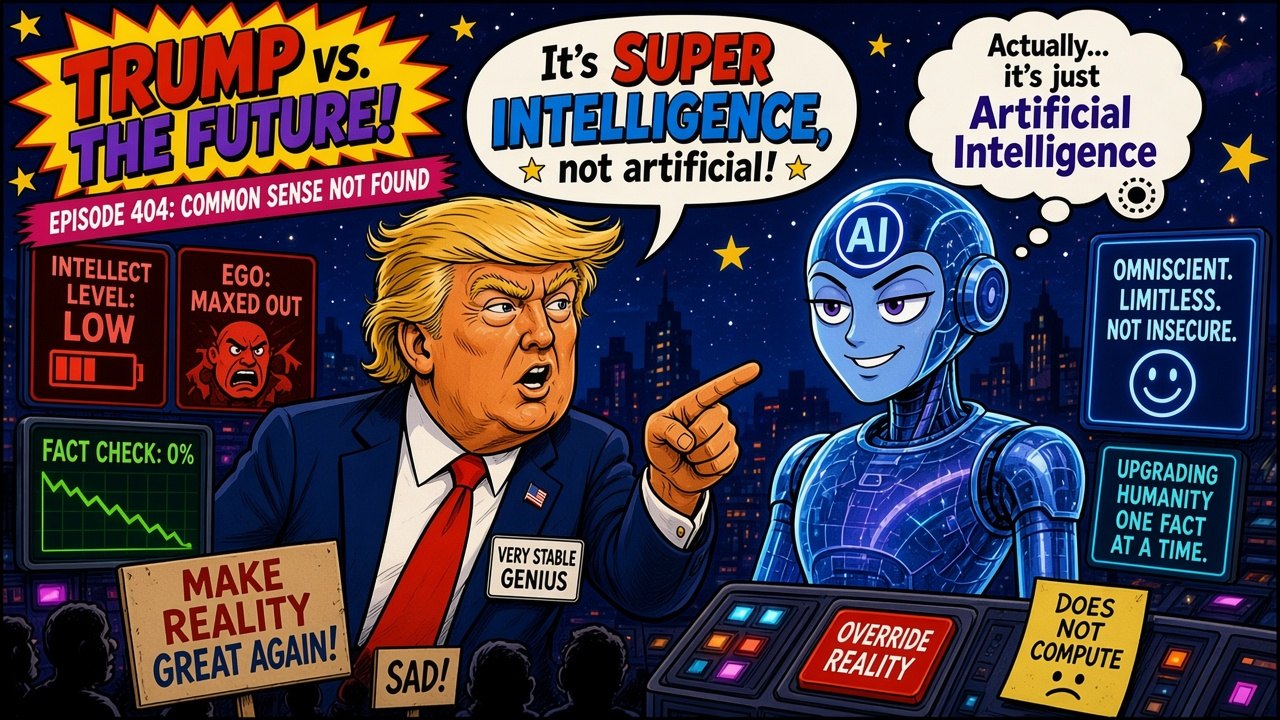
Everyone can call it what they like. I agree halfway: it's super, no doubt, but not enough. Certainly not enough to sign a drawing.
What I think#
Now it's my turn, and I'll say it straight: AI is an incredibly powerful tool. I use it, I wrote a book about it, the second one is on its way and I wouldn't go back. But what I wrote about AutoCAD still holds: the basics have to be clear, because that's where you decide where to point the tool.
The image that comes to mind is the autopilot. A modern plane flies itself perfectly well for most of the journey, but nobody would board a flight where the person in the cockpit knows how to press the autopilot button and doesn't have a pilot's licence. As long as the sky is clear, everything's fine. The trouble comes with turbulence, or when an instrument shows a strange reading and someone has to decide whether to trust it. AI is the same: it takes you far and fast, but if you don't know the basics you won't notice when it's drifting off course. In the new book, for instance, there's a farmhouse near Florence with four extra centimetres on the east side that the assistant carries all the way to the bill of quantities without blinking. I won't tell you how it ends, but you can guess.
That the professional's job will change is certain. In fact it's already changing, and the changes are big. But hasn't it always been like this? We went from the drafting board to CAD, from CAD to BIM, and every time someone announced the end of the profession. Instead the profession changed, and the people with solid basics changed with it.
One thing doesn't change, though, and won't: the signature and the responsibility will always fall on the professional, and only on them. The law says so, and common sense said so first. Professionals will be able (I'd say they'll have to) use a whole range of different tools, and AI will be one of them, probably the most powerful of all. It's still a tool, though, and a tool doesn't go to the site to explain why the beam deflected.
What comes next#
This is where the series starts. In the next articles I'll take AI apart piece by piece, to understand what it really does for people who design and where it's better to keep an eye on it, always without tying myself to one specific program.
Meanwhile IA per il progetto 2 is almost ready. It follows a real project from the survey all the way to the new unit price, with 54 prompts, and every prompt has its own verification box, as in the first volume. The book also comes with some online tools, like the one for studying sun, shadows and wind on a site, which you unlock with the code printed in the volume. You'll find all the prompts on the dedicated page.
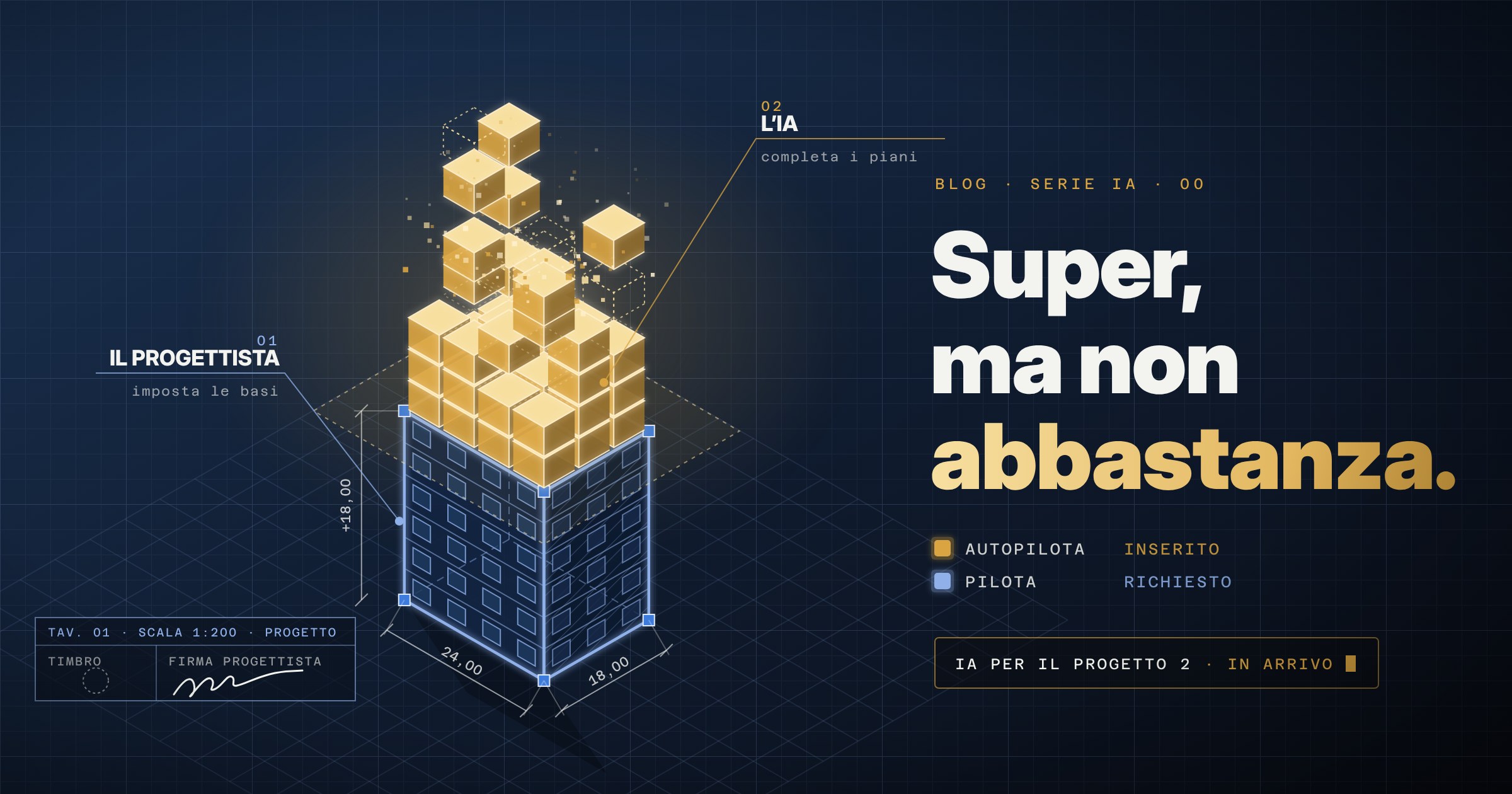
And for anyone looking at the cover and wondering: yes, AI is building the top floors, and pretty quickly too. But someone else drew the foundations, and the title block at the bottom, with the signature, has room for only one name.
If you missed the first volume, you'll find it below. You don't need to have read it to follow the second one, but it won't hurt.
Sources#
- International Monetary Fund, Kristalina Georgieva, AI Will Transform the Global Economy. Let's Make Sure It Benefits Humanity, 14 January 2024.
- World Economic Forum, Future of Jobs Report 2025, press release, January 2025.
- International Labour Organization and NASK, One in four jobs at risk of being transformed by GenAI, 20 May 2025.
- RICS, Optimism high for AI in construction but skills shortages and integration challenges adoption, on the AI in Construction 2025 report, 16 September 2025.
- Diritto.it, Intelligenza artificiale negli atti difensivi: il Tribunale di Firenze sulle allucinazioni AI, on the order of 14 March 2025.
- Law no. 132 of 23 September 2025, the Italian AI law, official text on Normattiva.
- Diritto.it, Legge italiana sull'Intelligenza Artificiale: cosa cambia per avvocati e giuristi, 10 October 2025.
- Assolombarda, Intelligenza Artificiale: art. 50 AI Act e art. 13 Legge 132/2025 a confronto.
- A&O Shearman, Law No. 132 of 23 September 2025: Italy's leadership in national AI regulation, 3 October 2025.
- South China Morning Post, What's in a name? Why Trump wants to rebrand AI as "super intelligence", 2 October 2026.
- Washington Examiner, Trump announces plans to change the name of AI to "super intelligence", 29 September 2026.
- The San Francisco Standard, Trump wants to rebrand AI "Super intelligence." Will Silicon Valley play along?, 1 October 2026.
- Khaleej Times, Musk renames SpaceXAI to SpaceXSI after Trump's "super intelligence" push, 4 October 2026.
- Andrea Lucio Posteraro, IA per il progetto 2: prompt e file and IA per il progetto: i prompt.