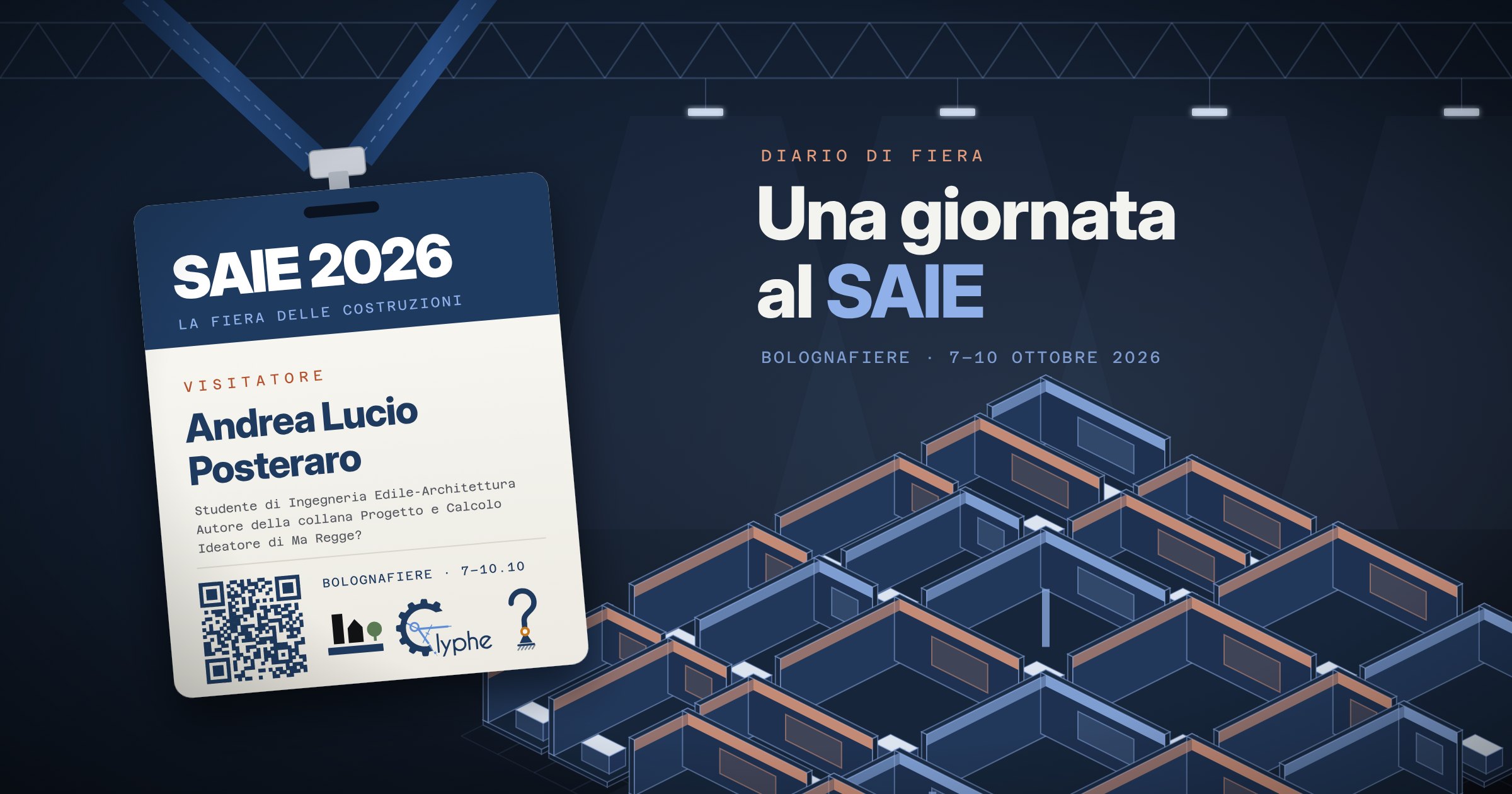
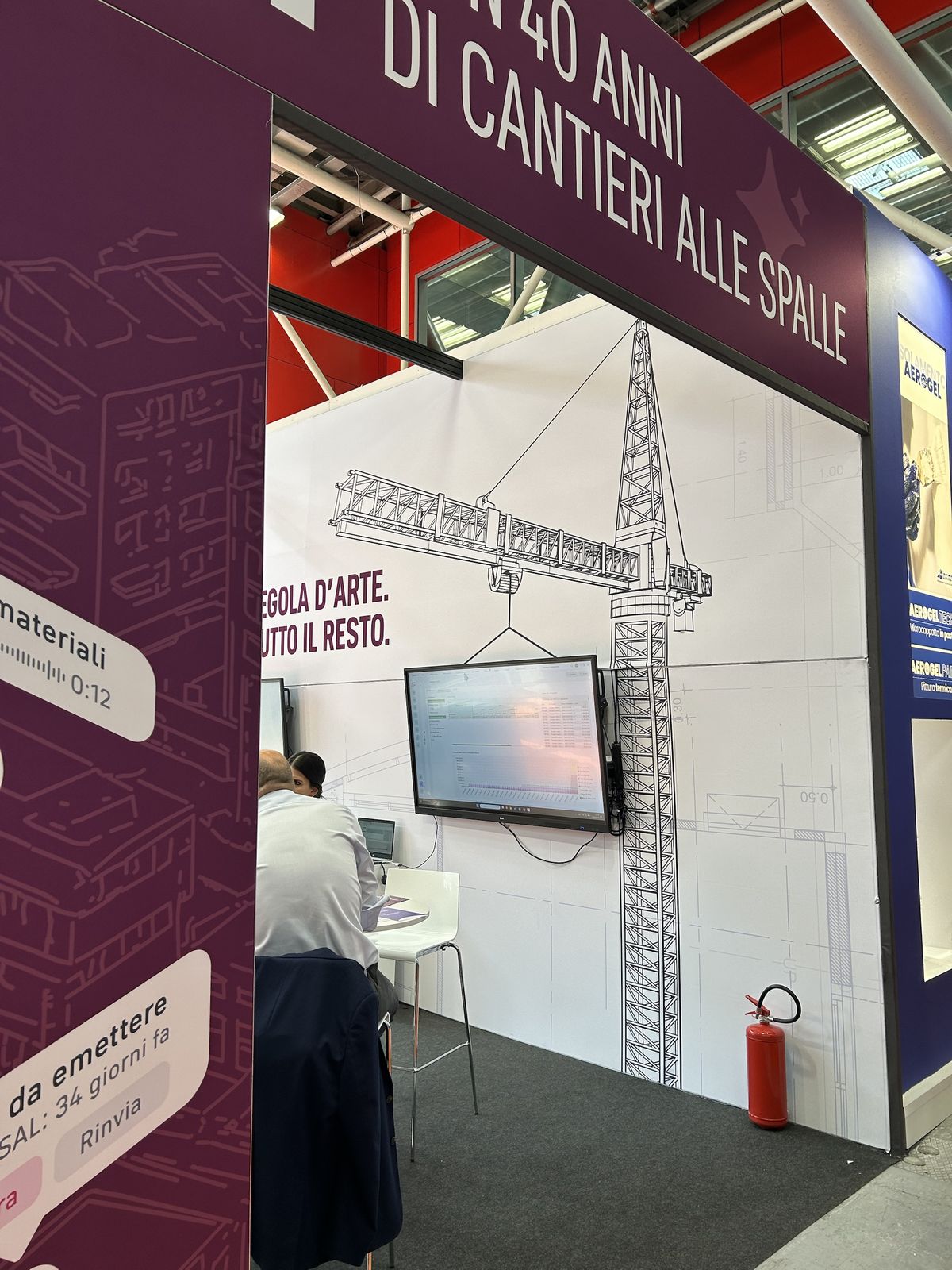
On 9 October I went to SAIE, the construction fair that this year was back at BolognaFiere. I went with a fairly simple idea: walk around, listen to people in the industry and get myself known. Business cards? No, this year it was QR codes and NFC cards. It's 2026, and paper is for drawings.
The journey was a bit rough: the classic train delay, which sadly you have to factor in. But SAIE is still the cornerstone event of Italian construction, the place where you always find something innovative, a few ideas that pull the sector forward and some inspiration. The organisation, as always, was very good and the offer solid and varied. I went mainly to promote Ma Regge?, my app that is still in beta, and the technical book series Progetto e Calcolo by Edizioni Glyphe.
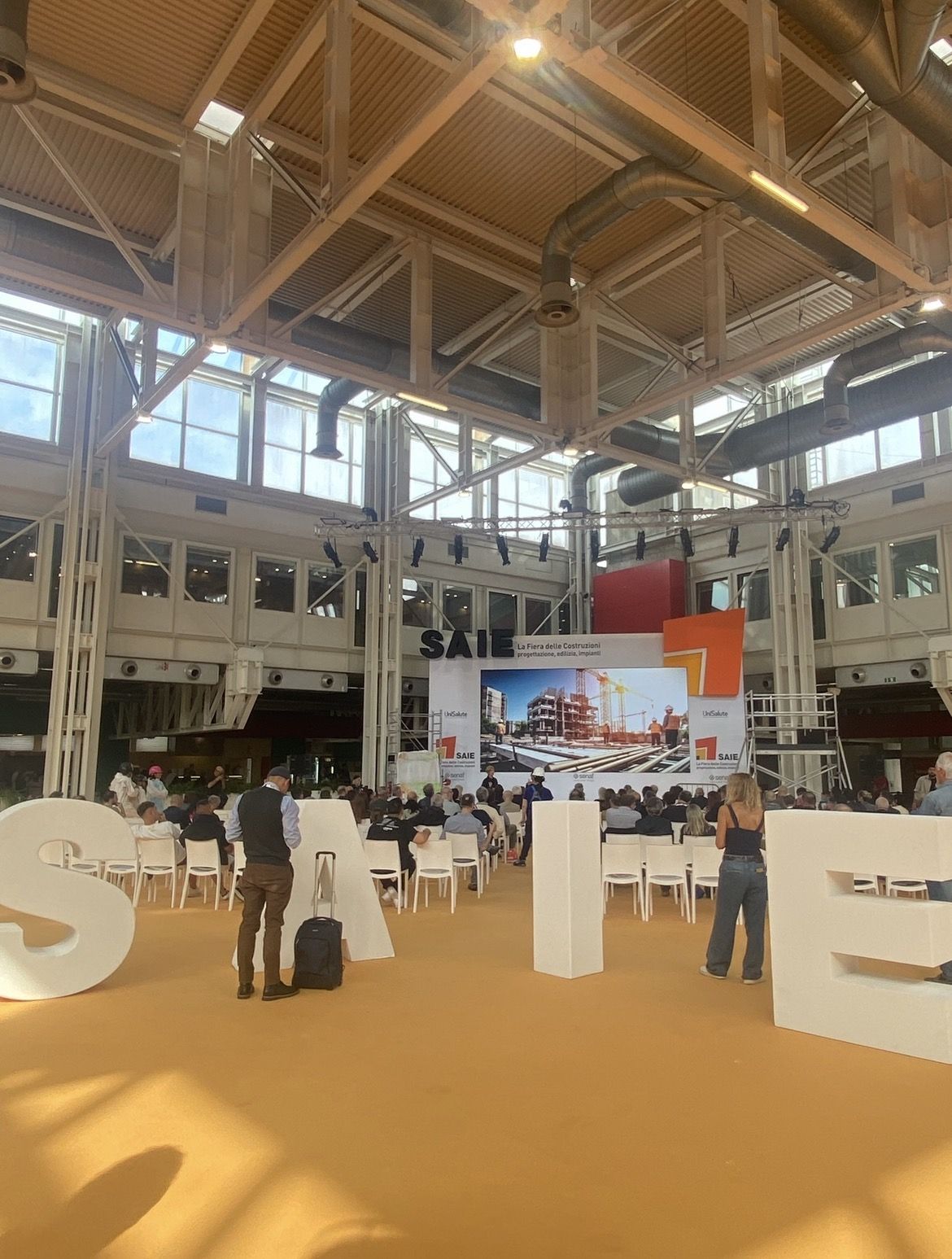
First, a few facts#
For those who don't know it: SAIE is one of the reference fairs for construction in Italy. Since 2018 it has been organised by Senaf, and it alternates every year between Bologna and Bari. This edition ran from 7 to 10 October 2026; the last one in Bologna, in 2024, passed 40,000 participants with more than 500 exhibiting companies, just to give an idea of the scale.
The programme is split into four tracks:
- SAIE Innovazione: digitalisation and site technologies, BIM and digital twins included;
- SAIE Sostenibilità: energy efficiency and materials;
- SAIE Infrastrutture: large public works;
- SAIE Persone al Centro: training and professional development.
Alongside the stands there are the Arena SAIE Lab, with talks on artificial intelligence, BIM, infrastructure and paving, a whole pavilion of the Formedil system devoted to training and safety, and the national final of EDILtrophy, the bricklaying competition that has been running since 2008. The common thread of this edition, right from the launch press conference, was "beyond the PNRR" (Italy's recovery plan): what happens to the sector when the extraordinary funds run out and the talk turns back to public-private partnerships.
End of the serious part. More or less.
The tour#
The day went according to plan. I had a deluxe companion, my little cousin, who took the chance to see a city she had never been to and to check whether I'm really as good as I look (spoiler: probably not). We dived straight into Bologna with tortellini and tagliatelle al ragù: a great lunch for a fair day, a bit pricey, but you factor that in too. All in all it was fun and educational, maybe a little tiring and expensive, but worth it.
Of everything I saw, three things stuck with me more than the rest: a floor that "lights up", an exoskeleton and a simulator. Then there's everything else, which is quite a lot.
The floor that lights up#
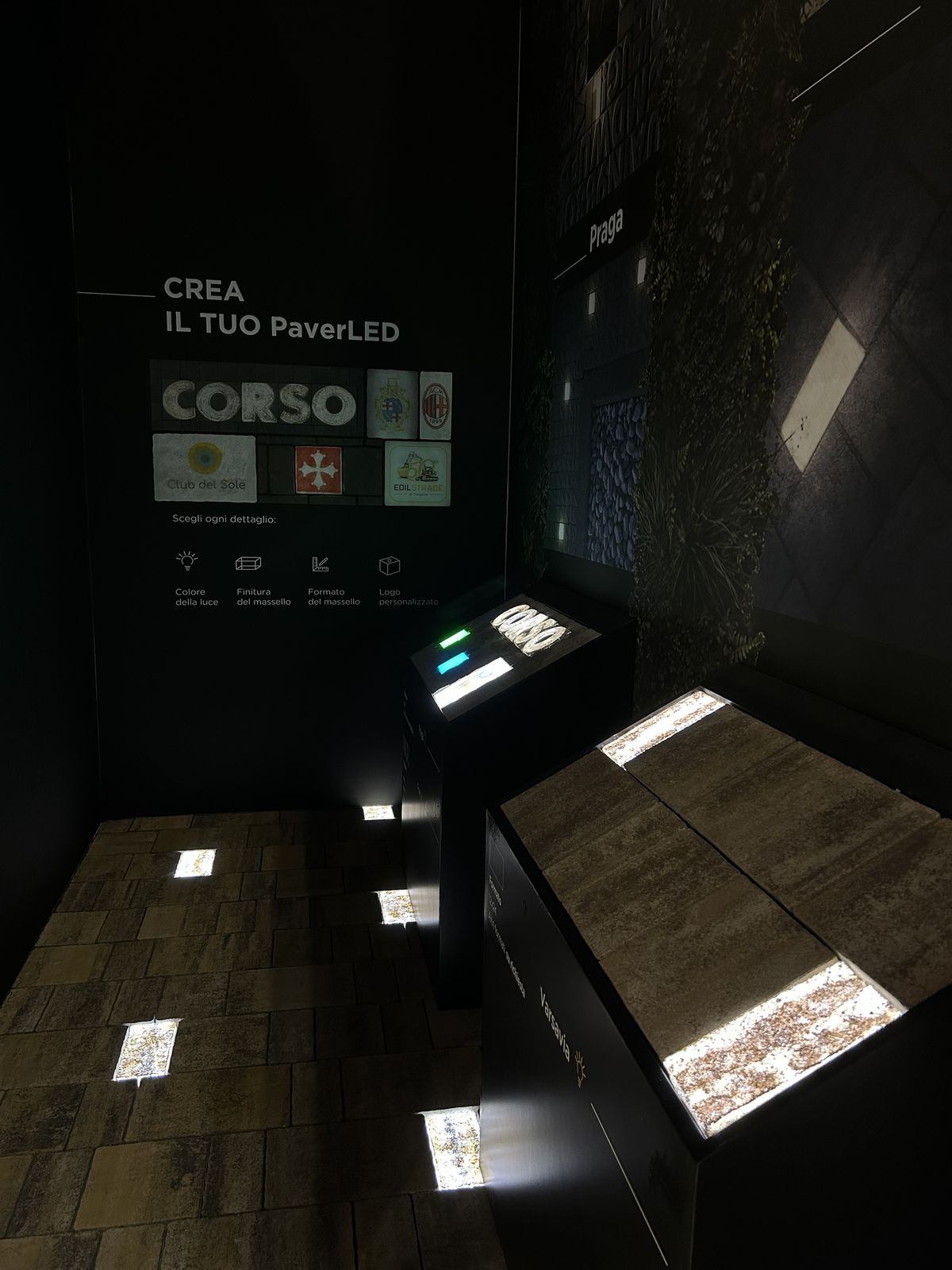
On the serious side, one of the most interesting things was Paver's LED paving. It's called PaverLED and, when it's off, it looks like an ordinary interlocking paver: same formats and same names as the range, at the stand there were for example the Varsavia and the Praga. Except that inside there's a hidden LED source, sealed in a single block of epoxy resin: the light spreads through the body of the stone, a bit like in an optical fibre, and comes out of the surface.
According to the manufacturer it is drivable, water-repellent and electrically insulating, and it is laid like any other paver, with mortar or adhesive, once the trench and the cable sleeve are ready. At the stand you could choose everything: light colour, finish, format and even a custom logo inside the stone. It is already used for illuminated pedestrian crossings, squares, courtyards and piers, and it's one of those products that make you think straight away about where you'd put it.
Exoskeletons today, robots tomorrow#
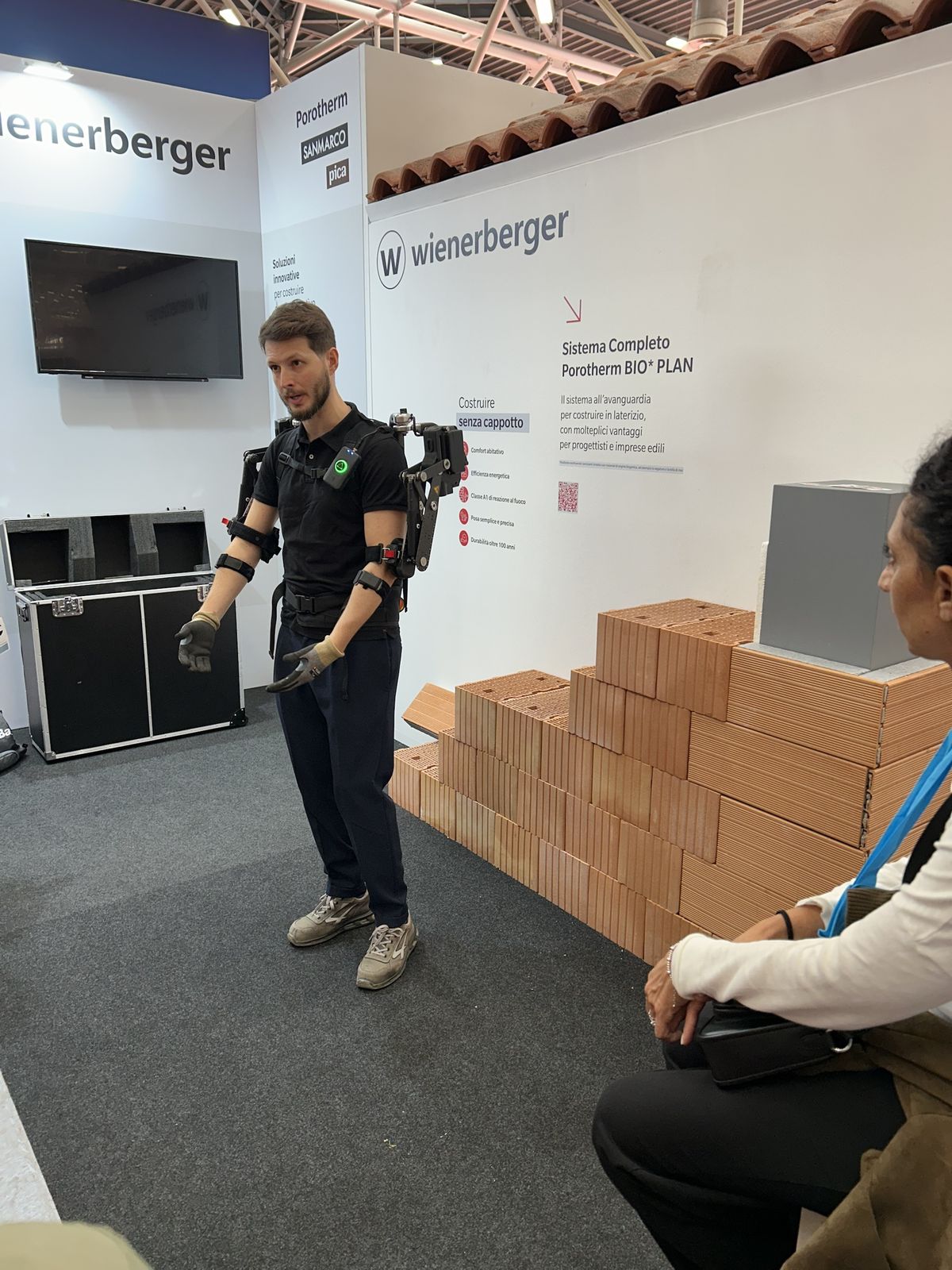
The exoskeleton on show at the Wienerberger stand was very interesting too: you wear it like a backpack, with two mechanical arms that follow the operator's own. The idea is simple: take some load off the shoulders and back of people who lift blocks all day or work with their arms above their head. It isn't science fiction: occupational exoskeletons exist precisely to reduce biomechanical overload, which is behind many musculoskeletal disorders, and since 2024 they even have their own Italian technical report, UNI/TR 11950.
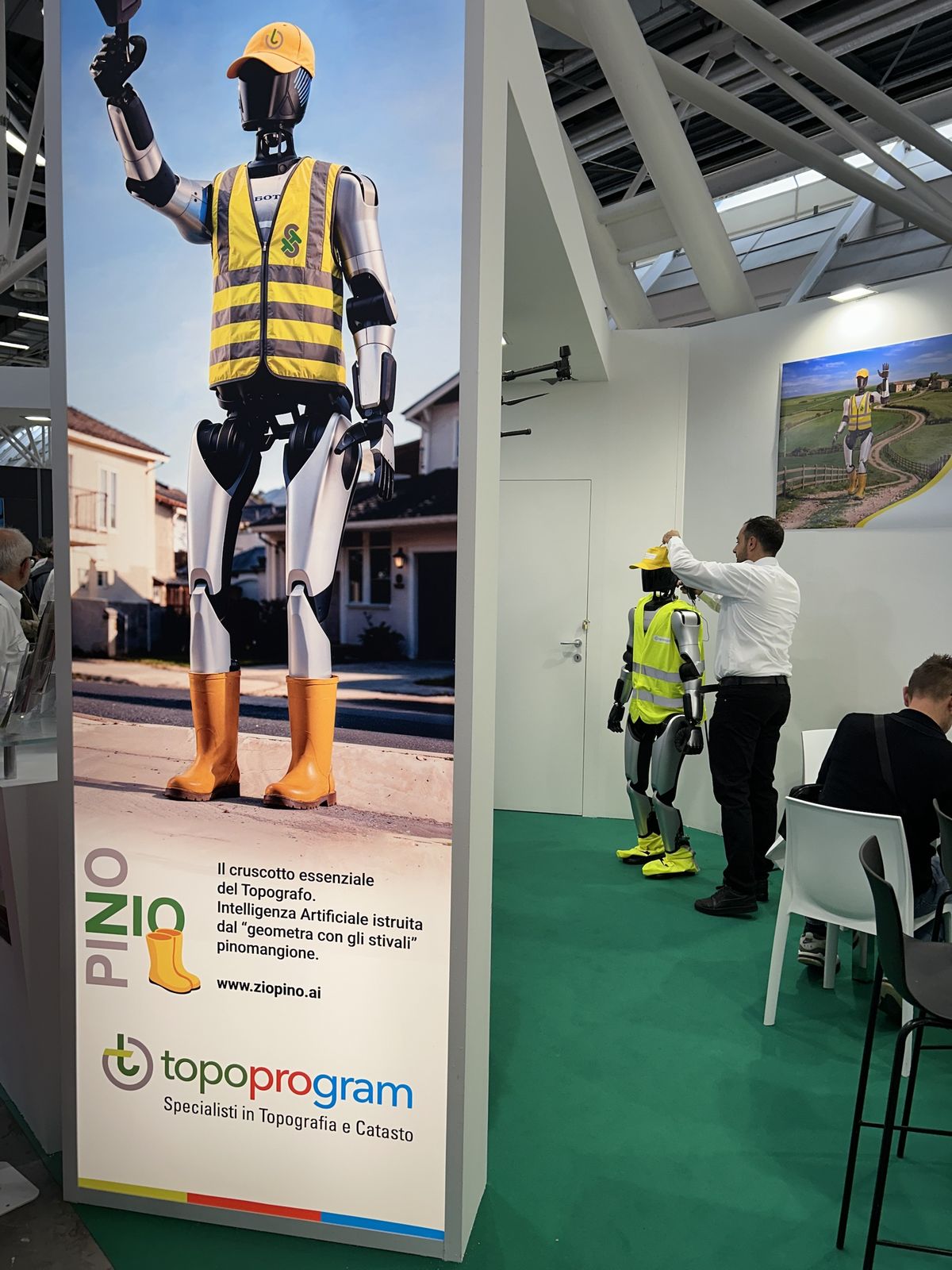
That said, I suspect that ten editions from now we won't see workers in exoskeletons any more, but robots working as the workers. And to be honest one in a hi-vis vest and boots was already there: Zio Pino ("Uncle Pino"), at the Topoprogram stand. The one in the aisle was a humanoid robot dressed for site, but the real Zio Pino lives in your phone: ziopino is an AI assistant for surveyors, trained on the experience of Pino Mangione, the "surveyor in wellies". It answers questions on the land and building registry, drone surveying, regulations and boundary re-establishment, from phone or computer, at any hour. A colleague who never takes a holiday, basically.
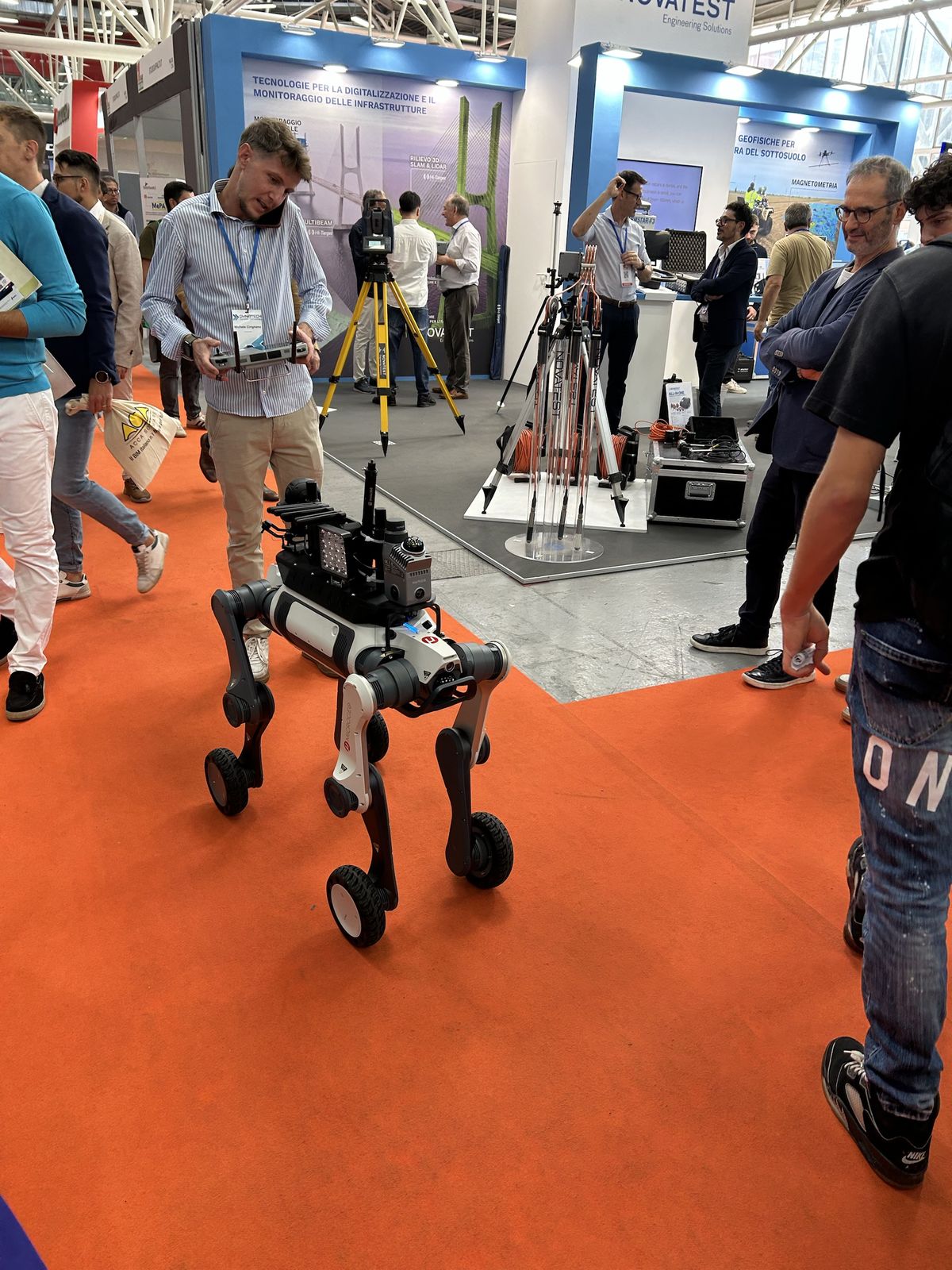
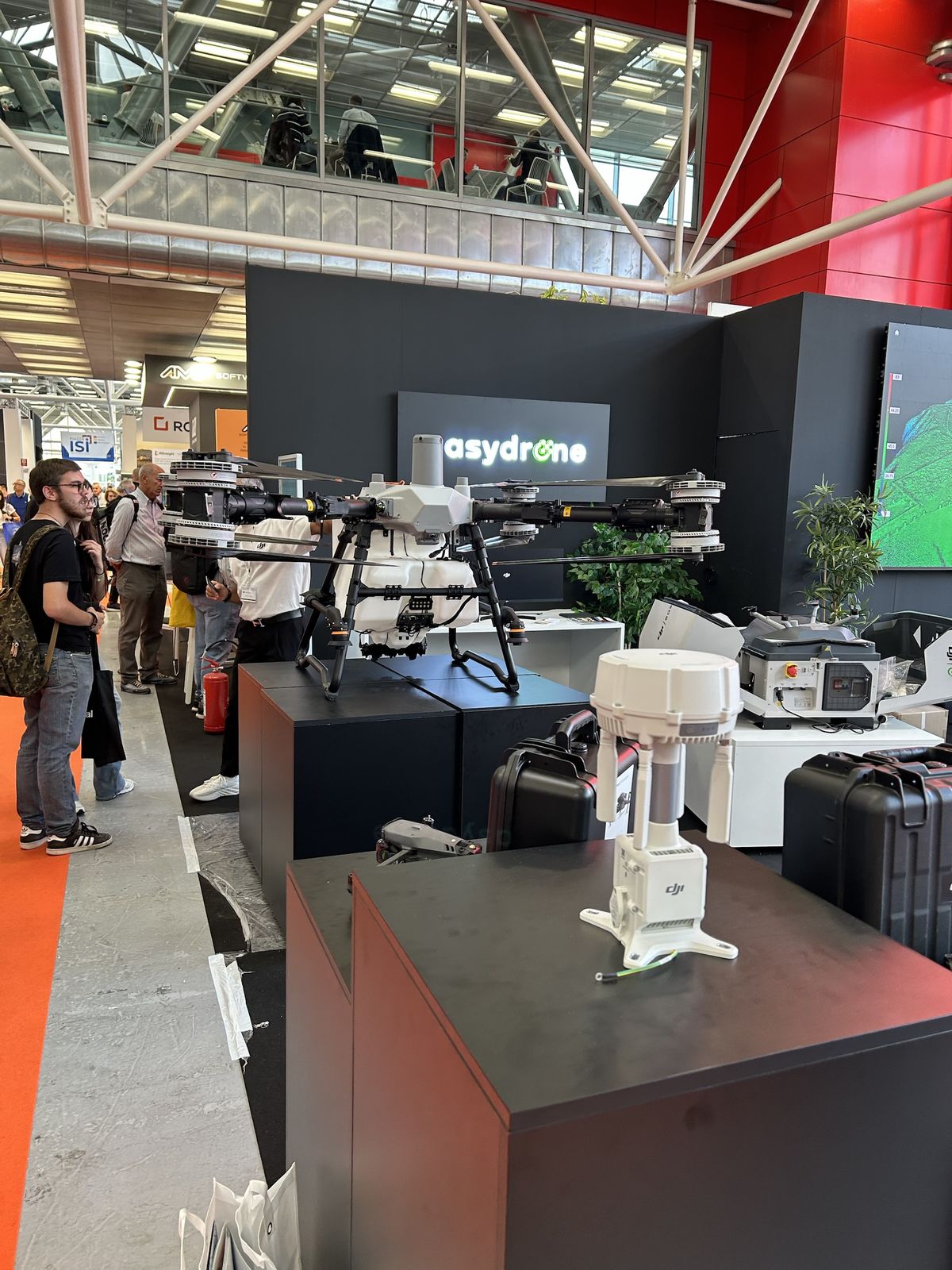
Meanwhile, quadruped robots with survey sensors and drones of every size were roaming the aisles.
The simulator#
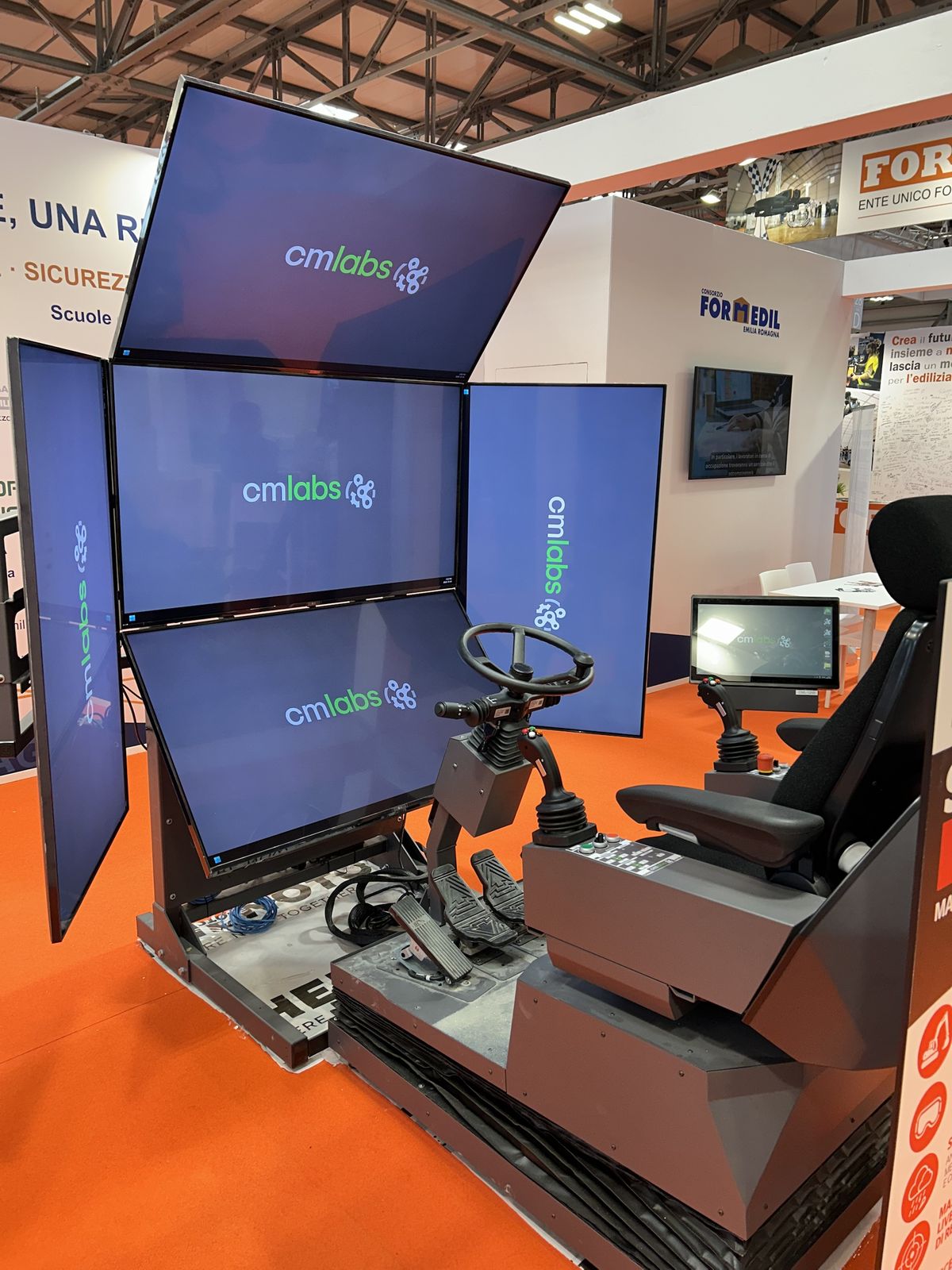
Also very good was the simulator in the Formedil area, by CM Labs: a complete station with seat, joysticks, pedals, steering wheel and a wall of screens all around, to try your hand as a crane operator or with earthmoving machines without the risk of demolishing anything. That's exactly what they are for: letting beginners practise normal and unexpected situations safely, before getting on the real machine.
Lifting and climbing#
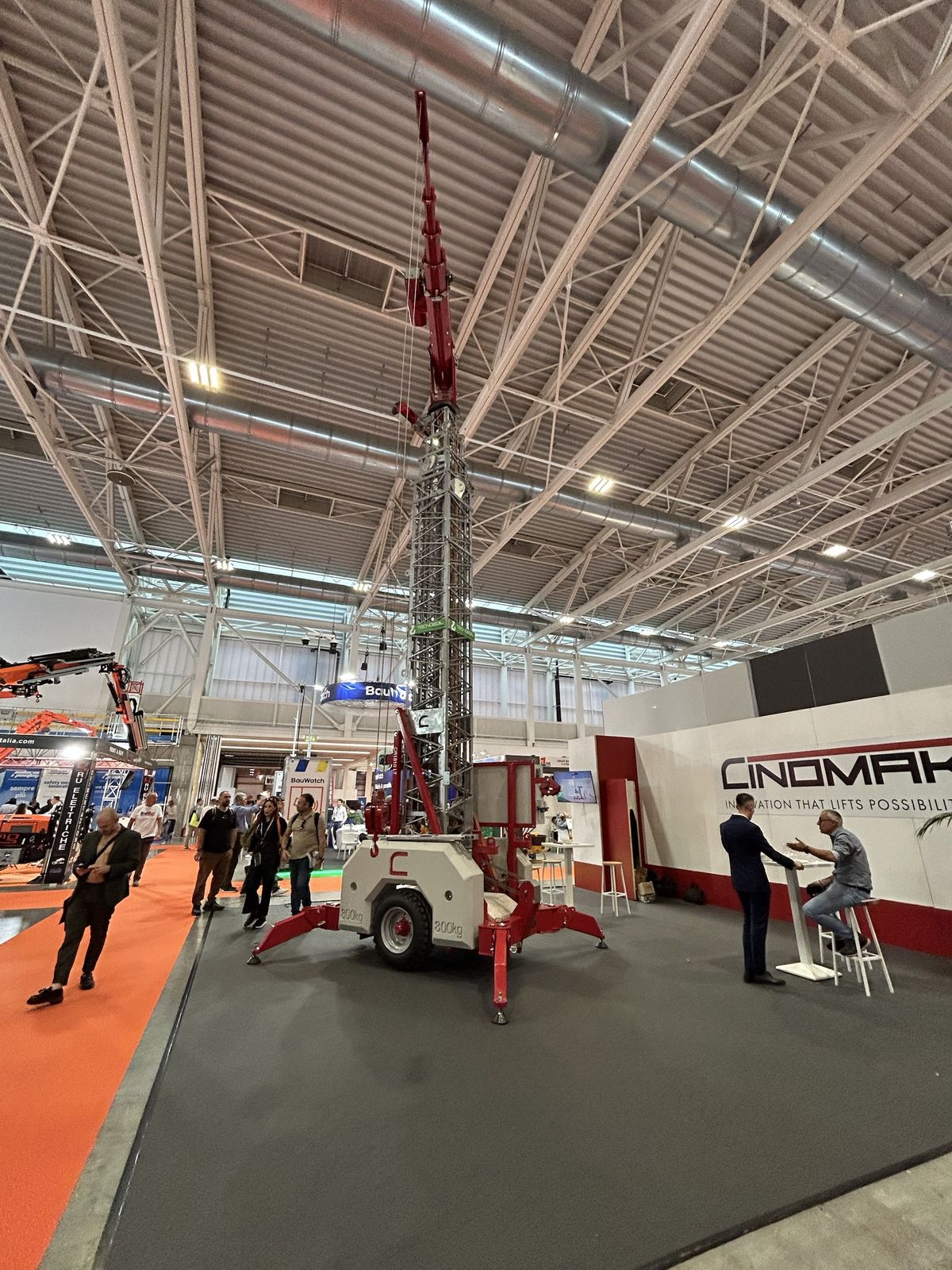
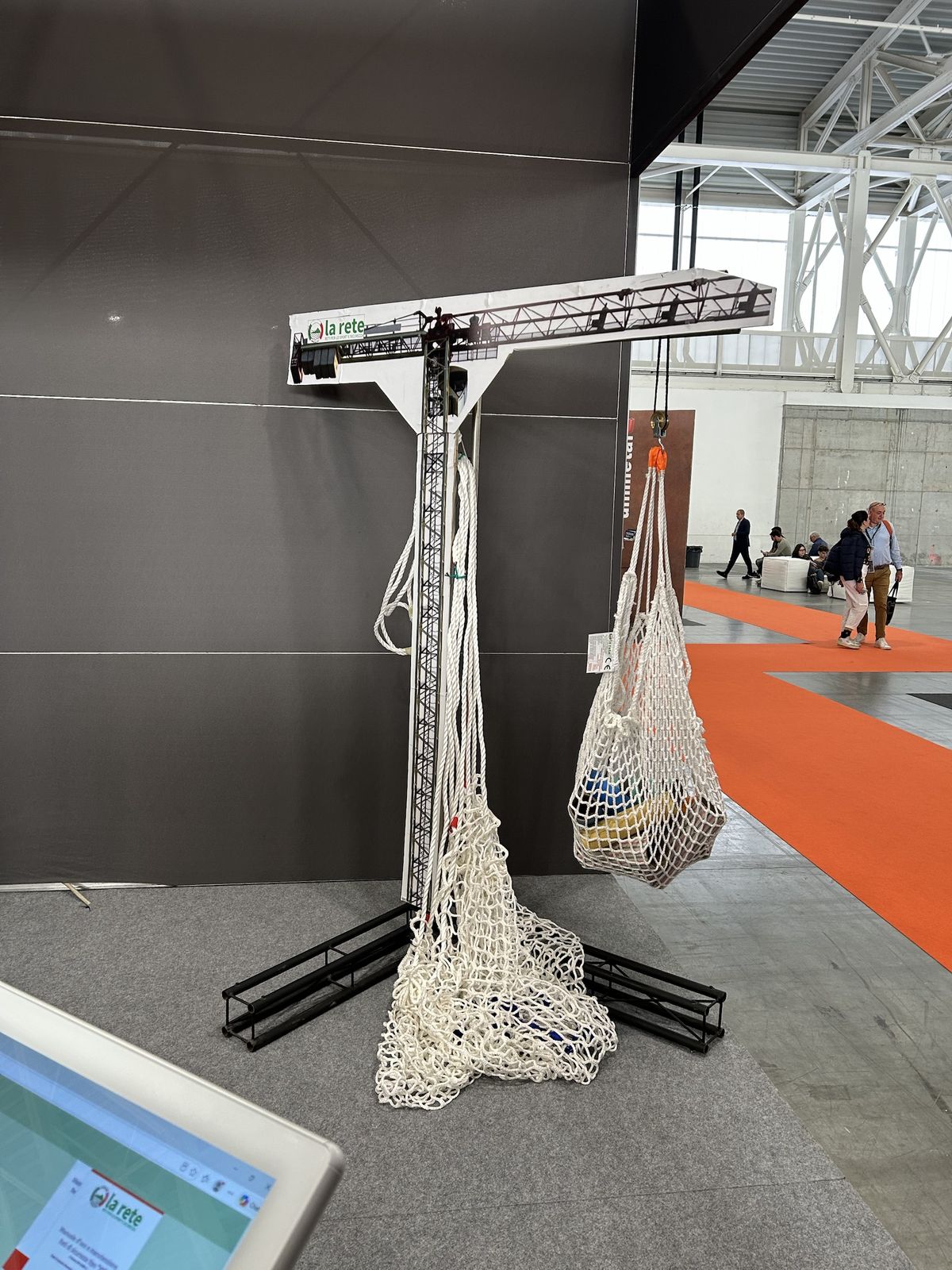
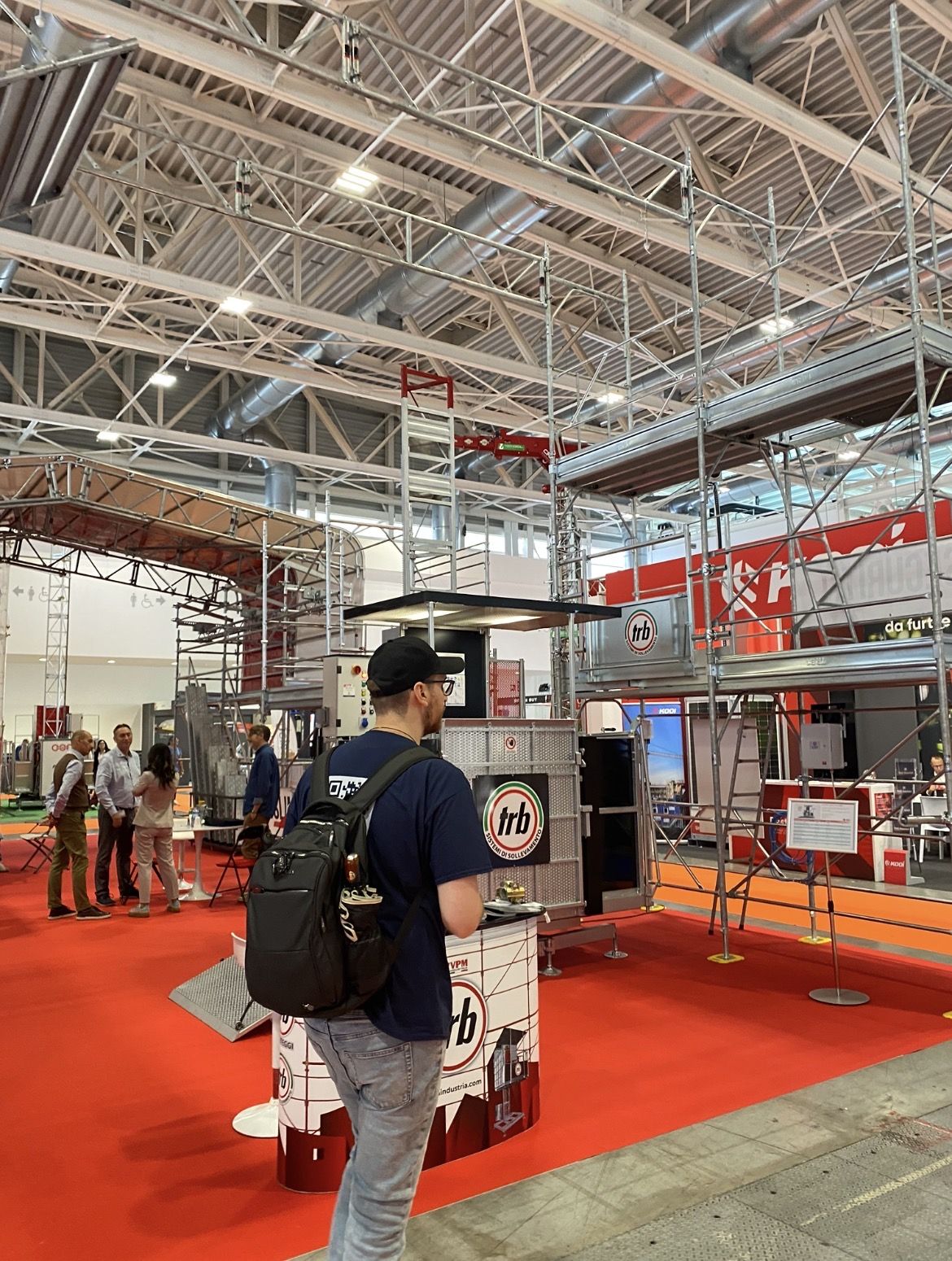
Among the cranes and scaffolding I had a sort of déjà vu, a nice one in its way: they were all there, one after another, the things I studied for my construction site exam. In the book they are diagrams, sections and clauses of the regulations; at the fair you find them in front of you at full size, assembled, and you can finally walk around them. It's partly why I wrote Il cantiere, the fourth volume of the series: people coming out of university can size a beam, but on their first day on site this is exactly what they face.
Structures and materials#
Managing the site#
The gadget ranking#
Let's be honest: you go to a fair to keep up to date, but also to come home with a full bag. So here is the verdict, absolutely unrequested.
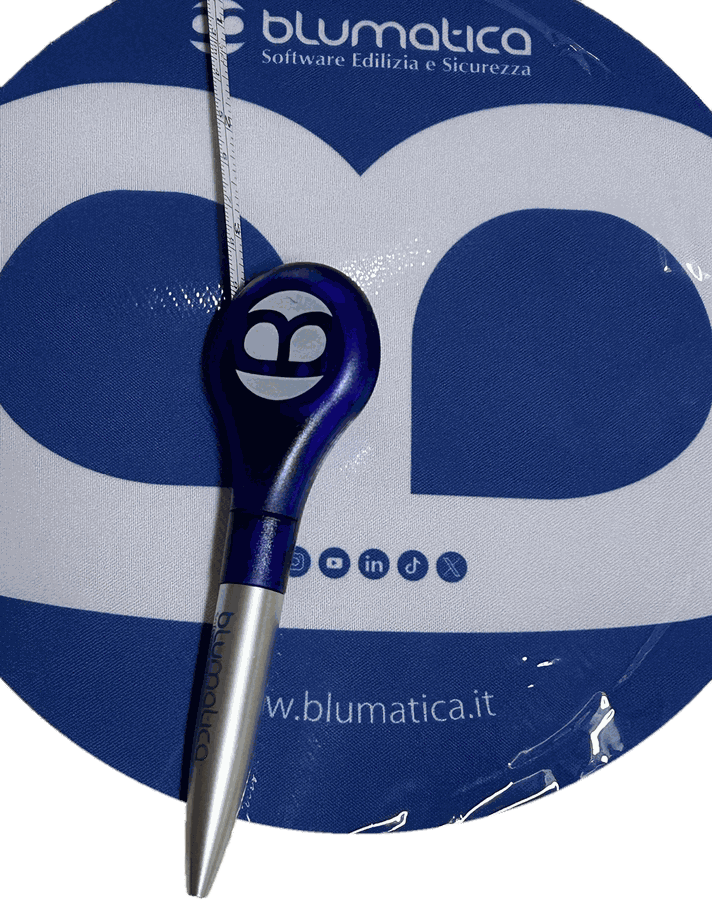
Best gadget: Blumatica, no contest. A mouse pad and a pen with a built-in tape measure: for someone who spends his days between drawings and measurements, it's practically a made-to-measure gift (sorry).
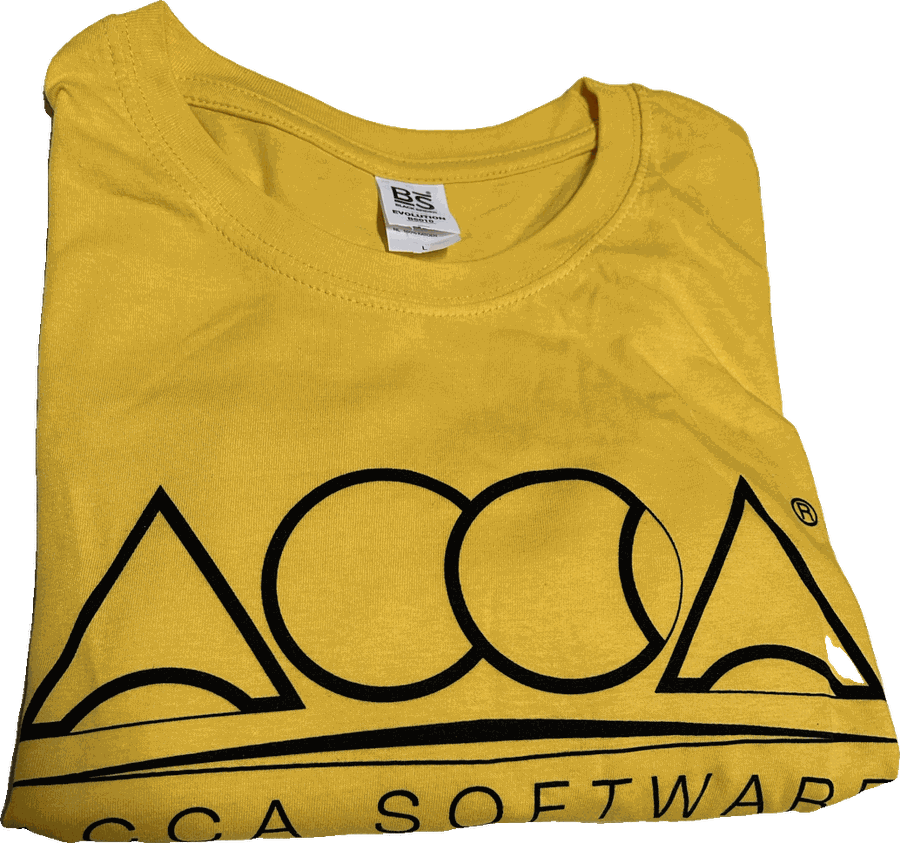
Special mention, on a personal note: ACCA. After two years of trying I finally managed to get their T-shirt. It took two SAIEs, but I've got it.
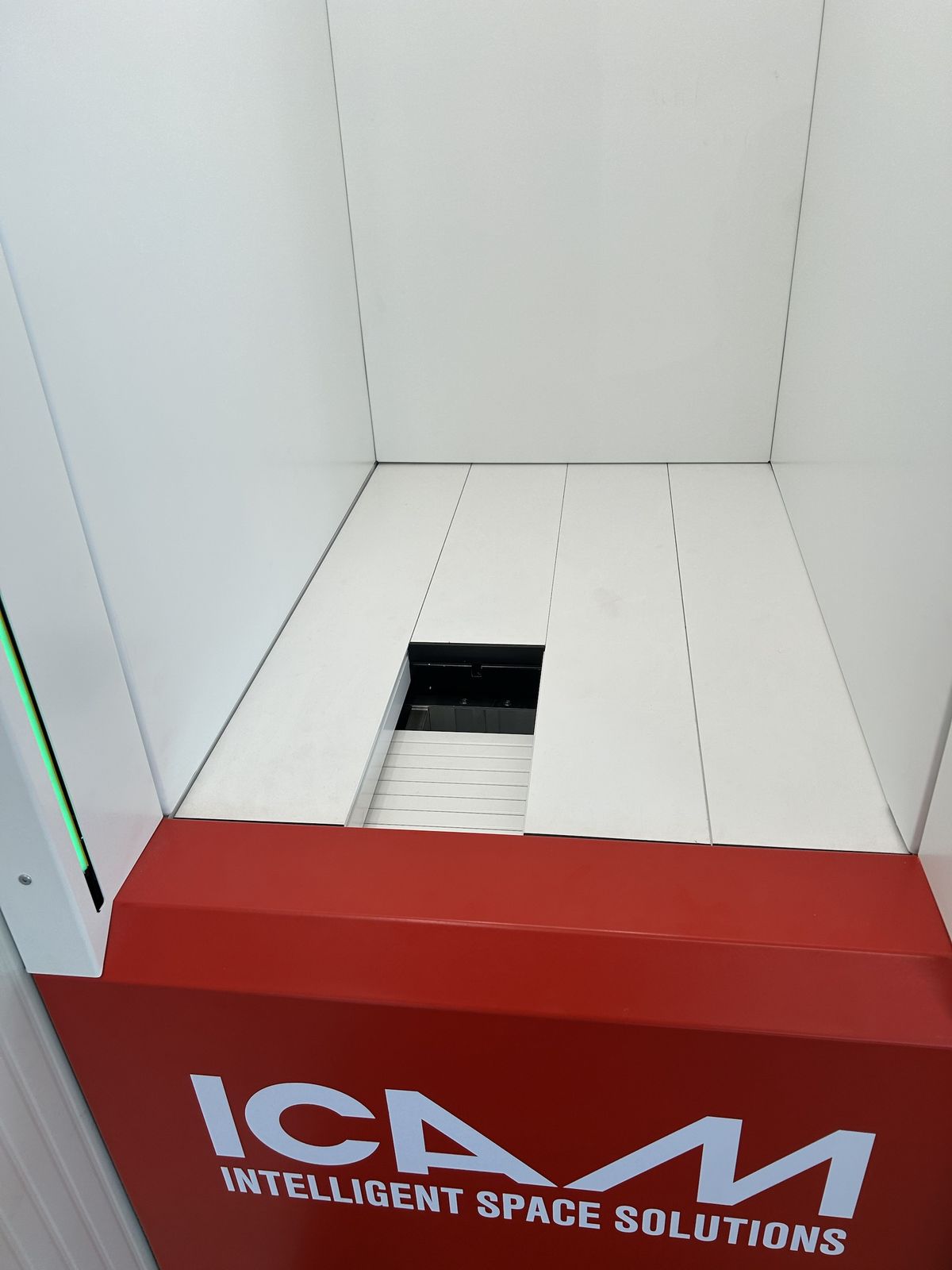
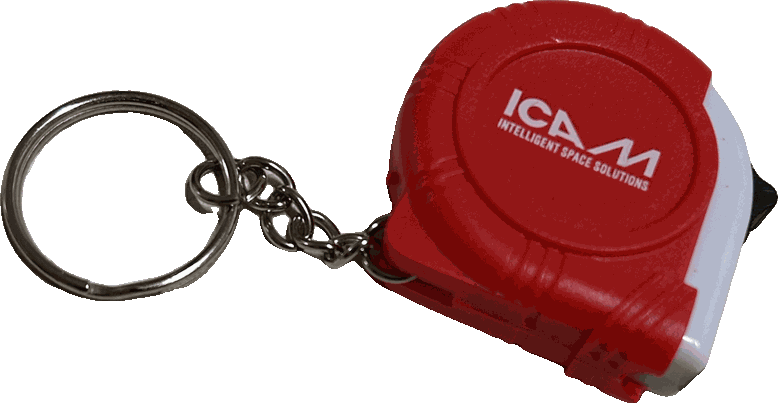
Best delivery method: ICAM, "Intelligent Space Solutions", which wins hands down. The gadget, a keyring tape measure, isn't handed to you by anyone: their automated vertical storage system delivers it, straight from this hatch. Second tape measure of the day, after the one in Blumatica's pen: clearly, at SAIE they measure a lot.
What I'm taking home#
First of all, artificial intelligence. It's everywhere now: every program integrates it and many offer it as a design assistant. Compared to two years ago, partly because of the times, it is by far the dominant theme of the fair (and anyone who read the article on AutoCAD and AI already knows what I think). Right after that comes BIM, in all its forms: from the BIM specialist certification paths to the many BIM programs on the market.
Then the contacts: many came out of the fair around Ma Regge? and the book series. And a nice surprise: I met a fellow student from a course I had taken as an elective in Architecture. Running into each other in the middle of a SAIE pavilion was lovely.
For those going next time#
A few practical tips, from someone who spent a whole day there:
- Comfortable shoes. It sounds like a joke, but given the blisters on my feet, if I could go back I would definitely pick a different kind of shoe.
- Register online beforehand and check the talks programme: deciding on the spot, in front of the map, means missing half of them.
- Bring a quick way to leave your contact. A business card ends up at the bottom of a bag; a QR code scanned on the fly ends up in the address book.
Next time round, if the alternation holds, it should be Bari's turn.
The facts about this edition come from the official fair website and from Ediltecnico.